
Shreya Pujari is a Fulbright-Nehru Research Scholar and ethnographic filmmaker documenting oral song traditions among the Mising and Rabha communities of Assam, India. Over the course of a nine-month fieldwork grant, she traveled across Upper and Lower Assam conducting participatory research through interviews, audio-visual recordings, and cultural immersion. Her work focuses on preserving and promoting indigenous musical traditions that are historically transmitted through oral practice and remain underrepresented in academic and digital spaces.
Born and raised in the United States to Assamese parents, Shreya’s research is also deeply personal — a reconnection with her cultural roots and a growing understanding of the communities, values, and histories that shaped her family’s identity. Through this project, she hopes to create an accessible digital archive that supports cultural preservation while respectfully amplifying indigenous voices and lived experiences.
Shreya is a graduate of Berklee College of Music, where she studied Mediterranean Music and Contemporary Writing & Production. Her background as a vocalist, arranger, and global folk musician informs her interdisciplinary approach to research, combining ethnomusicology, documentary storytelling, and music performance.
ABOUT THE PROJECT
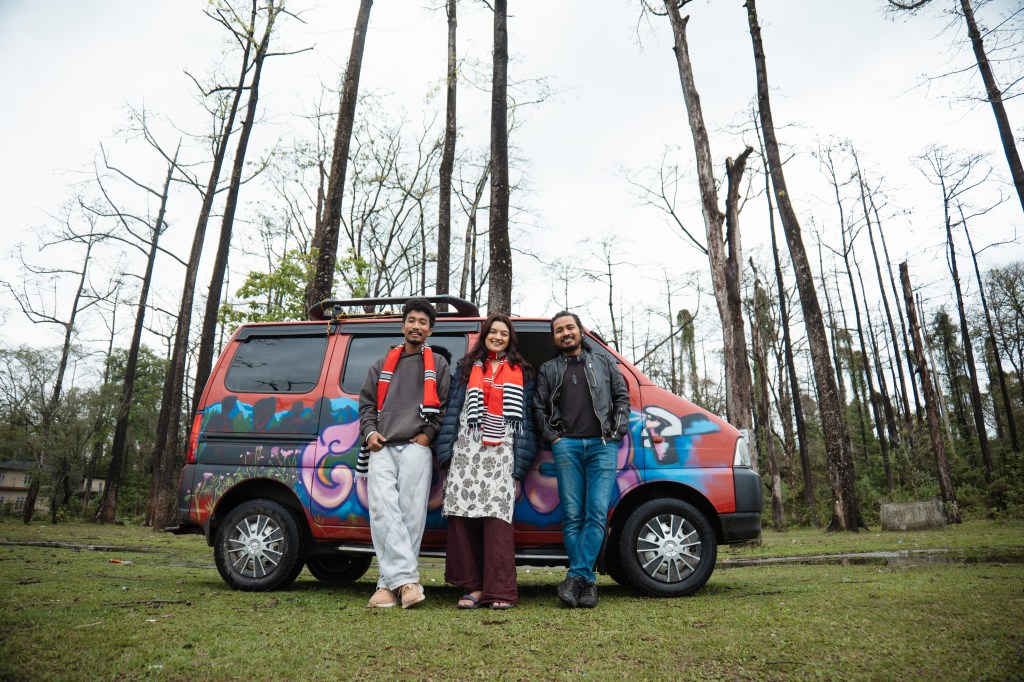
Assam Archives began as a nine-month Fulbright-Nehru research project documenting oral song traditions among the Mising and Rabha communities of Assam. Over the course of the grant, filmmaker and researcher Shreya Pujari traveled across the state – from the river islands and floodplains of Jonai and Majuli in Upper Assam to the villages of Goalpara in Lower Assam. They carried cameras, recording equipment, and a small creative team into homes, festivals, farms, and community spaces.
Rather than documenting these traditions from a distance, the project was built through lived experience and long-term relationships. The team stayed within communities, shared meals, attended ceremonies, participated in daily routines, and spent time getting to know the singers and families behind the music. Songs were recorded in their natural environments, where they continue to exist as part of everyday life, while weaving, farming, mourning, celebrating, and gathering together.
Ethics, trust, and consent were central to the fieldwork process. Recordings and interviews were conducted collaboratively and with permission, with an emphasis on respectful representation and cultural context. Assam Archives aims not only to preserve these musical traditions, but also to create an accessible platform where indigenous voices, stories, and cultural knowledge can continue to be heard, shared, and remembered.
 ASSAM ARCHIVES